
Affiliate Disclosure: As an Amazon Associate, DeeperThing earns from qualifying purchases. This means we may receive a commission when you buy products through links on this page, at no additional cost to you. We only recommend products we have researched and believe provide genuine value. Our editorial recommendations are independent and not influenced by any brand or manufacturer.
Introduction: The Outdoor Smart Home Revolution in 2026
Your backyard is no longer just a patch of grass and a grill. In 2026, outdoor living spaces have become an extension of the connected home, bringing intelligence, automation, and convenience to every corner of your property. From robot lawn mowers that trim while you sleep to weather-aware sprinkler controllers that save thousands of gallons of water, the outdoor smart home category has exploded with innovation.
According to recent market data, the smart outdoor living segment grew by over 35% in 2025 alone, driven by falling prices, improved battery technology, and the mainstream adoption of AI-powered yard care. Homeowners are realizing that the same convenience they enjoy indoors (voice-controlled lighting, automated schedules, remote monitoring) can transform their outdoor spaces into safer, more efficient, and more enjoyable environments.
Whether you want to keep your family safe with outdoor security cameras, reduce your water bill with a smart irrigation system, or host backyard movie nights with outdoor smart speakers, this guide covers the 12 most impactful devices for upgrading your outdoor living space in 2026. We also include budget breakdowns, installation tips, automation ideas, and answers to the most common questions homeowners ask before investing in outdoor smart home technology.
If you are new to smart home technology, we recommend reading our complete smart home setup guide for beginners before diving into outdoor installations. For those already running a smart home ecosystem, our 25 smart home automation ideas can help you integrate outdoor devices into your existing routines.
Why You Need Outdoor Smart Home Devices
Security and Peace of Mind
Outdoor security is the number one reason homeowners invest in smart outdoor technology. A visible security camera can reduce the likelihood of a break-in by up to 50%, according to data from the University of North Carolina. Smart cameras, video doorbells, and motion-activated lighting create a perimeter of awareness that extends from your front door to your property line. You receive instant alerts on your phone when someone approaches your home, and you can communicate with visitors (or deter intruders) from anywhere in the world.
Our comprehensive smart home security guide covers indoor protection strategies, but outdoor security is the first line of defense. When combined with smart locks on gates and garage doors, you create a layered security system that makes your property significantly less attractive to criminals.
Convenience and Time Savings
The average American spends about 70 hours per year mowing their lawn. A robot lawn mower eliminates that chore entirely, returning that time to your weekends. Smart sprinkler controllers adjust watering schedules automatically based on weather forecasts, so you never water your lawn before a rainstorm. Outdoor smart plugs let you control holiday lights, fountains, and patio heaters from your phone, no more running outside in the cold to flip a switch.
Energy and Water Conservation
Smart irrigation controllers can reduce outdoor water usage by 20 to 50 percent, which translates to significant savings on utility bills. A smart sprinkler controller pays for itself within the first year for many households. Outdoor smart lighting with LED technology and scheduling capabilities uses a fraction of the energy consumed by traditional halogen fixtures. Our smart home energy saving guide dives deeper into how connected devices reduce household energy consumption.
Entertainment and Ambiance
Backyard gatherings are more enjoyable with outdoor smart speakers streaming your favorite playlists, color-changing string lights setting the mood, and a portable power station keeping everything running far from an electrical outlet. Smart outdoor living transforms your backyard into a destination, not just an afterthought.
Top 12 Outdoor Smart Home Devices for 2026
1. Outdoor Security Cameras
Outdoor security cameras are the foundation of any smart outdoor setup. They provide 24/7 monitoring, motion detection, two-way audio, and night vision, giving you eyes on your property at all times.
Ring Spotlight Cam Plus (Battery)
The Ring Spotlight Cam Plus is one of the best-selling outdoor security cameras on Amazon, with approximately 10,000 units sold monthly. It features 1080p HD video, color night vision, two-way audio, and a built-in spotlight and siren. The battery-powered design means no wiring is required, and it integrates perfectly with Alexa-enabled devices.
- Resolution: 1080p HD
- Field of view: 140 degrees horizontal
- Power: Battery (or solar with optional panel)
- Weather rating: IP5X
- Smart home: Works with Alexa
For a budget-friendly alternative, the Blink Outdoor 4 offers two-year battery life at under $70. If you prefer a no-subscription option, the eufy SoloCam S340 includes built-in storage and a solar panel for continuous charging. You can compare more options in our best home security cameras guide.
2. Video Doorbells
A video doorbell is often the first smart outdoor device homeowners purchase, and for good reason. It lets you see, hear, and speak to anyone at your front door from your smartphone, tablet, or smart display.
Ring Video Doorbell (Wired)
The Ring Video Doorbell remains the category leader. It offers 1080p HD video, advanced motion detection, night vision, and two-way talk. The wired version eliminates battery charging, making it ideal for homes with existing doorbell wiring.
- Resolution: 1080p HD
- Field of view: 155 degrees horizontal, 90 degrees vertical
- Power: Wired (existing doorbell transformer)
- Smart home: Works with Alexa
For a wider comparison, check out our best video doorbells for 2026 guide, where we tested and ranked the top models across price points.
3. Robot Lawn Mowers
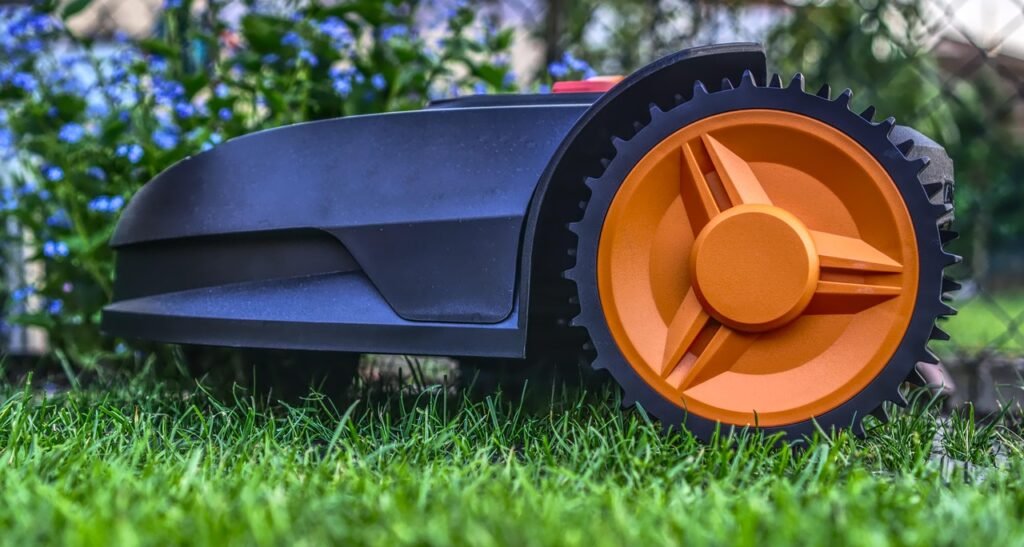
Robot lawn mowers have matured significantly in 2026. The latest models use RTK GPS, LiDAR, and AI vision to map your yard without boundary wires, making installation far simpler than earlier generations.
Segway Navimow i105N
The Segway Navimow i105N is the best-value wire-free robot mower on the market. Priced at $799, it covers lawns up to 1/8 acre using EFLS 2.0 RTK positioning combined with AI-assisted VisionFence obstacle avoidance. No perimeter wire means installation takes minutes instead of hours.
- Coverage: Up to 1/8 acre (5,445 sq ft)
- Cutting width: 7.1 inches
- Navigation: RTK + AI vision (wire-free)
- Slope handling: Up to 30%
- App control: Navimow app for scheduling and zone management
For larger properties, the Segway Navimow i110N covers up to 1/4 acre at $1,099. Our best robot lawn mowers for 2026 guide includes comprehensive testing data across all major brands and price tiers.
4. Smart Sprinkler Controllers
Smart sprinkler controllers connect to your existing irrigation system and use local weather data to optimize watering schedules automatically. They prevent overwatering before rain, adjust for seasonal changes, and let you control everything from your phone.
Rachio 3 Smart Sprinkler Controller (8-Zone)
The Rachio 3 Smart Sprinkler Controller (8-Zone) is the top-rated smart sprinkler controller, earning a 4.7-star rating from thousands of Amazon reviewers. It features hyperlocal Weather Intelligence Plus, which pulls data from multiple weather sources to make intelligent watering decisions. The Rachio app is widely considered the best in its category for ease of use.
- Zones: 8 (also available in 16-zone)
- Weather integration: Hyperlocal forecasting with rain, freeze, and wind skip
- Smart home: Works with Alexa, Apple HomeKit, Google Assistant
- Installation: 30 minutes or less, no special tools
For a budget option, the Orbit B-hyve 6-Zone Smart Sprinkler Controller (57946) offers similar core features at roughly one-third the price. Our best smart sprinkler controllers guide provides a detailed comparison.
5. Outdoor Smart Plugs
Outdoor smart plugs are the simplest way to add intelligence to existing outdoor devices. Plug in string lights, water features, patio heaters, or pumps, and instantly gain app control, scheduling, and voice commands.
TP-Link Kasa Smart Outdoor Plug
The TP-Link Kasa Smart Outdoor Plug is the category leader, offering two independently controlled outlets, IP64 weather resistance, and a compact design that fits standard outdoor receptacles. It supports scheduling, countdown timers, and away mode for security.
- Outlets: 2 (independently controlled)
- Weather rating: IP64
- Smart home: Works with Alexa, Google Assistant, Samsung SmartThings
- Connectivity: Wi-Fi (2.4 GHz), no hub required
The Amazon Smart Plug is a great alternative if you live in an Alexa-only household. Learn more in our best smart plugs guide.
6. Outdoor Smart Lighting
Smart outdoor lighting does more than illuminate your yard. It enhances security, creates ambiance for entertaining, and reduces energy costs through scheduling and automation.
Govee Outdoor String Lights 2
The Govee Outdoor String Lights 2 (H7037, 48ft) brings app-controlled RGBICW color lighting to your patio. With IP65 waterproofing, anti-UV materials rated for 25,000 hours, and music sync mode, these are the most feature-rich outdoor string lights available. Control brightness, color, and effects through the Govee Home app, Alexa, or Google Assistant.
- Length: 48 feet (also available in 96ft and 144ft)
- Bulbs: 15 S14 LED bulbs with RGBICW color
- Weather rating: IP65 (string), IP44 (adapter)
- Smart home: Works with Alexa, Google Assistant
- Expandable: Up to 3 strands on one control box
For floodlight security lighting, the Ring Floodlight Cam Wired Plus combines 2,000-lumen floodlights with a 1080p security camera. And for indoor-to-outdoor bulb solutions, see our best smart light bulbs guide.
7. Smart Locks for Gates and Garage
Smart locks are not just for front doors. Weather-resistant models can secure side gates, garage entries, and backyard sheds, giving you keyless access control across your entire property.
eufy Smart Lock S230 (Touch and Wi-Fi)
The eufy Smart Lock S230 features IP65 weatherproofing, making it suitable for covered outdoor installations like gate entries and garage doors. It unlocks via fingerprint (0.3-second recognition), keypad, app, or physical key. The built-in Wi-Fi means no separate hub is required.
- Unlock methods: Fingerprint, keypad, app, physical key
- Weather rating: IP65
- Construction: Zinc alloy and stainless steel
- Battery: Up to 12 months on 8 AA batteries
- Smart home: Works with Alexa and Google Assistant (via Wi-Fi)
Our best smart locks for 2026 guide includes indoor and outdoor options across all budgets.
8. Outdoor Smart Speakers
An outdoor smart speaker serves double duty: it provides high-quality audio for backyard gatherings and acts as a voice control hub for your outdoor smart home devices.
Sonos Move 2
The Sonos Move 2 is the premium choice for outdoor audio. With an IP56 weather resistance rating, 24-hour battery life, and automatic Trueplay tuning that adapts to outdoor acoustics, it delivers room-filling stereo sound wherever you place it. The built-in handle makes it easy to carry from patio to poolside.
- Battery life: Up to 24 hours
- Weather rating: IP56 (dust and water resistant)
- Connectivity: Wi-Fi and Bluetooth
- Audio: Dual tweeters + single mid-woofer for true stereo
- Smart features: Alexa built-in, Apple AirPlay 2
The Move 2 also works as a voice control hub for your outdoor devices, letting you say “Alexa, turn on the patio lights” without reaching for your phone. For a comparison of voice assistant platforms, read our Alexa vs Google Home vs Apple HomeKit comparison.
9. Smart Weather Stations
A smart weather station provides hyperlocal weather data specific to your property, which is far more accurate than regional forecasts. This data can automate other outdoor devices like sprinkler controllers and smart blinds.
Ambient Weather WS-2902C WiFi Smart Weather Station
The Ambient Weather WS-2902C is the best-value smart weather station, measuring temperature, humidity, wind speed and direction, rainfall, UV index, and solar radiation. It connects to Wi-Fi and sends data to Weather Underground, where your station becomes part of a global network. The ambientweather.net dashboard provides historical charts and alerts.
- Sensors: Temperature, humidity, wind speed/direction, rainfall, UV, solar radiation
- Connectivity: Wi-Fi (2.4 GHz)
- Display: Indoor console with color LCD
- Integration: Works with Alexa, Google Assistant, IFTTT
For HomeKit users, the Netatmo Weather Station offers native Apple HomeKit support along with indoor and outdoor sensors.
10. Smart Garden Sensors
Smart garden sensors monitor soil moisture, temperature, sunlight, and nutrients, taking the guesswork out of plant care. They are especially valuable for vegetable gardens, flower beds, and container plants.
KITHOUSE 4-in-1 Wireless Soil Moisture Meter
The KITHOUSE 4-in-1 Wireless Soil Moisture Meter measures soil moisture, temperature, light intensity, and time. The wireless design supports multiple sensors connected to a single receiver, making it easy to monitor several garden zones simultaneously.
- Measurements: Soil moisture, temperature, light, time
- Power: 3 AA batteries per sensor
- Wireless range: Up to 100 meters (open area)
- Multi-sensor: Supports multiple sensors on one receiver
When paired with a smart sprinkler controller, garden sensors can trigger targeted watering only when soil moisture drops below a threshold, maximizing water efficiency.
11. Portable Power Stations for Outdoor Use
Portable power stations provide clean, quiet, emission-free electricity anywhere on your property. They are perfect for powering outdoor smart devices in areas without electrical outlets, running outdoor movie nights, or serving as backup power during outages.
Jackery Explorer 1000 v2
The Jackery Explorer 1000 v2 is a top seller on Amazon, offering 1,070Wh of capacity with a 1,500W AC output. It uses LiFePO4 battery chemistry for a 10-year lifespan and charges from 0 to 100% in just one hour via AC. The unit features multiple ports including USB-C (100W), AC outlets, and a 12V car port.
- Capacity: 1,070Wh
- Output: 1,500W AC (3,000W surge)
- Battery type: LiFePO4 (10+ year lifespan)
- Charge time: 1 hour (AC fast charge)
- Ports: 3x AC, 2x USB-C, 2x USB-A, 1x 12V car port
For higher capacity, the EcoFlow DELTA 2 offers 1,024Wh with 1,800W output and supports solar charging for off-grid outdoor setups.
12. Smart Pest Control
Smart pest control devices use ultrasonic frequencies, smart traps, and connected sensors to manage insects and rodents without harmful chemicals. They are safe for families with children and pets, and they provide data on pest activity patterns.
YARDefense Ultrasonic Pest Repeller
The YARDefense Ultrasonic Pest Repeller offers plug-and-play simplicity with remote control customization. It emits ultrasonic frequencies that deter mice, rodents, cockroaches, spiders, ants, flies, and mosquitoes without using toxic chemicals. The included remote lets you adjust frequency modes for different pest types.
- Coverage: Up to 1,600 sq ft per unit
- Pest types: Rodents, insects, mosquitoes, spiders
- Power: Plug-in (AC adapter included)
- Control: Remote control with customizable frequency settings
For comprehensive coverage of large outdoor areas, consider placing multiple units around the perimeter of your patio and garden spaces.
Outdoor Network Coverage: Extending Wi-Fi to Your Backyard
Every smart outdoor device depends on a reliable Wi-Fi connection. If your router sits in a far corner of your house, your backyard may be a Wi-Fi dead zone. Before installing any outdoor smart devices, assess and improve your network coverage.
Mesh Wi-Fi Systems
A mesh Wi-Fi system is the most effective solution for whole-property coverage. Unlike traditional range extenders (which cut bandwidth in half), mesh systems use dedicated backhaul channels to maintain full speed across all nodes. Place a satellite node near a window facing your backyard, or in a garage, to extend coverage outdoors.
Weatherproof Outdoor Access Points
For large properties, a dedicated outdoor access point provides the strongest signal. Look for models with IP67 or higher weather ratings that can be mounted on exterior walls or poles. These connect to your router via Ethernet cable and broadcast Wi-Fi across your yard.
Wi-Fi Range Extenders
If a mesh system is beyond your budget, a Wi-Fi range extender placed near a window or exterior wall can boost your signal enough to cover a small to medium backyard. Just be aware that extenders typically reduce throughput by 50%.
For a deep dive into networking strategies, read our smart home networking guide, which covers mesh systems, extenders, and wired backhaul options in detail.
Budget Plans: Building Your Outdoor Smart Home at Any Price Point
You do not need to spend thousands of dollars to start building a smart outdoor setup. Here are four budget tiers with recommended product combinations.
The $100 Starter Kit
At this price point, focus on the highest-impact devices:
- Ring Outdoor Cam (Stick Up Cam) (approximately $40)
- TP-Link Kasa Outdoor Smart Plug (approximately $20)
- YARDefense Ultrasonic Pest Repeller (approximately $25)
This gives you basic security monitoring, smart control of one outdoor device, and pest management. Check out our best smart home devices under $100 guide for more budget-friendly ideas.
The $300 Backyard Upgrade
Add more coverage and convenience:
- Ring Outdoor Cam or WYZE Cam v4 (approximately $40)
- Ring Video Doorbell (approximately $65)
- TP-Link Kasa Outdoor Smart Plug (approximately $20)
- Govee Outdoor String Lights 2 (approximately $50)
- KITHOUSE Soil Moisture Meter (approximately $25)
- YARDefense Pest Repeller (approximately $25)
- Wi-Fi range extender (approximately $75)
The $500 Smart Yard System
Add automation and water savings:
- All items from the $300 plan
- Orbit B-hyve 6-Zone Smart Sprinkler Controller (approximately $62)
- Ambient Weather WS-2902C Weather Station (approximately $160)
The weather station and sprinkler controller work together to optimize watering based on actual local conditions, not regional averages. This combination can reduce water bills significantly. See our energy saving guide for more on reducing utility costs.
The $1000 Premium Outdoor Setup
Full automation with premium devices:
- Ring Spotlight Cam Plus (approximately $150)
- Ring Video Doorbell (approximately $65)
- Segway Navimow i105N Robot Lawn Mower (approximately $799… or use i105N at $799)
- Govee Outdoor String Lights 2 (approximately $50)
At this tier, the robot lawn mower becomes the centerpiece. It eliminates the most time-consuming outdoor chore while the camera and doorbell provide comprehensive security coverage. Add a smart plug for lighting control and you have a fully automated outdoor environment.
Installation Considerations: Weatherproofing, IP Ratings, and Temperature
Understanding IP Ratings
IP (Ingress Protection) ratings tell you how well a device resists dust and water. The rating consists of two digits: the first indicates dust protection (0-6), and the second indicates water protection (0-9). For outdoor devices, look for these minimum ratings:
- IP44: Splash-resistant. Suitable for covered areas like porches and overhangs.
- IP54: Dust and splash-resistant. Acceptable for partially sheltered outdoor use.
- IP65: Jet-water resistant. Ideal for most outdoor applications, including direct rain exposure.
- IP66: Powerful jet-water resistant. For areas with heavy water exposure like near sprinklers.
- IP67: Can be submerged briefly. Best for ground-level installations.
Temperature Tolerance
Check the operating temperature range before purchasing. Most outdoor smart devices are rated for 14 to 122 degrees Fahrenheit (-10 to 50 degrees Celsius). If you live in a region with extreme cold or heat, look for extended-temperature models. Battery-powered devices are particularly sensitive to cold, as lithium-ion batteries lose capacity below freezing.
Power Source Considerations
- Battery-powered: Easiest to install, but requires periodic charging. Solar panels can extend battery life indefinitely for cameras and sensors.
- Wired: Most reliable, but requires running cable through walls or conduit. Best for permanent installations like floodlight cameras and outdoor speakers.
- Solar: Self-sustaining, but placement matters. Panels need direct sunlight for at least 4-6 hours per day.
- Low-voltage: Common for outdoor yard lighting. Requires a transformer but is safe for DIY installation.
Placement Tips
- Mount cameras 8 to 10 feet high to prevent tampering while maintaining a clear field of view.
- Place smart speakers under eaves or overhangs to protect from direct rain, even if they are weather-rated.
- Keep Wi-Fi-dependent devices within 30 to 50 feet of your router or mesh node for reliable connectivity.
- Use weatherproof junction boxes for all wired connections.
- Run cables through conduit when possible to protect against rodent damage and UV degradation.
For troubleshooting common installation issues, consult our smart home troubleshooting guide.
Outdoor Automation Scene Design
The real power of outdoor smart home devices emerges when you combine them into automated routines. Here are practical automation scenes you can create:
Sunset Entertainment Scene
Trigger: Sunsets (using your smart home hub’s astronomical clock)
- Outdoor string lights turn on at 60% brightness
- Outdoor smart speaker starts playing your summer playlist
- Smart plug powers on patio heater or fan (depending on temperature)
- Security cameras switch to night vision mode
Vacation Security Scene
Trigger: Manually activated or when everyone leaves home (geofencing)
- Outdoor lights cycle on and off randomly between 6 PM and 11 PM to simulate occupancy
- All cameras activate maximum sensitivity and send instant alerts
- Smart locks on gates and garage engage automatically
- Lawn mower schedule pauses to avoid signaling an empty house
Weather-Responsive Irrigation Scene
Trigger: Weather forecast data from smart sprinkler controller
- If rain is forecast within 24 hours, skip scheduled watering
- If soil moisture sensor reads below 30%, trigger targeted zone watering
- If temperature exceeds 95 degrees F, increase watering duration by 20%
- If freeze warning is issued, shut off all irrigation and send notification
Morning Routine Scene
Trigger: Sunrise or scheduled time
- Outdoor lights turn off
- Robot lawn mower starts its mowing schedule (if it is a mowing day)
- Weather station logs overnight conditions
- Coffee machine (on smart plug) starts brewing
For more automation inspiration, browse our 25 smart home automation ideas, which includes both indoor and outdoor routines.
Common Pitfalls and How to Avoid Them
1. Ignoring Wi-Fi Coverage First
The most common mistake is buying outdoor smart devices before ensuring adequate Wi-Fi coverage. Devices that constantly drop their connection are frustrating and unreliable. Always test your Wi-Fi signal in the exact location where you plan to install each device before mounting it.
2. Choosing Subscription-Dependent Devices
Many security cameras and doorbells require monthly subscriptions for cloud storage and advanced features. Factor in these ongoing costs when comparing products. Some brands, like eufy and Wyze, offer local storage options that eliminate subscription fees entirely.
3. Underestimating Installation Complexity
Read installation requirements carefully before purchasing. A wired camera requires running cable through your walls, which may need an electrician. Battery-powered devices are simpler but require periodic maintenance. Robot lawn mowers with boundary wire installation can take an entire weekend, while wire-free models with RTK navigation can be set up in under an hour.
4. Mixing Incompatible Ecosystems
If your home runs on Alexa, buying a HomeKit-exclusive device limits functionality. Check compatibility before purchasing. Matter-compatible devices offer cross-platform support and are becoming the standard. Our best Matter-compatible devices guide highlights products that work across all major platforms.
5. Neglecting Battery Maintenance in Winter
Lithium-ion batteries lose capacity in cold weather. If you live in a region with freezing winters, bring battery-powered outdoor devices indoors or switch to wired models for cold-season use. Solar panels may also need snow removal to maintain charging.
6. Overlooking Local Regulations
Some HOAs and municipalities have restrictions on outdoor cameras, lighting brightness, and audible alarms. Check local regulations before installing devices that might violate rules. Robot lawn mower noise may also be regulated in some communities.
For a broader list of mistakes to avoid, read our smart home mistakes to avoid guide.
Comparing Outdoor Smart Home Ecosystems: Which Platform Is Right for You?
When building an outdoor smart home system, platform compatibility matters more than any individual feature. A camera that works perfectly with Alexa but not Google Home will frustrate users invested in the Google ecosystem. Here is how the three major platforms handle outdoor smart home devices:
Amazon Alexa
Alexa has the broadest device compatibility, especially for outdoor products. Ring cameras, Blink devices, and Amazon Smart Plugs integrate natively with Alexa, allowing you to view camera feeds on Echo Show devices and control outdoor devices with voice commands. Alexa Routines can automate outdoor scenes based on triggers like time, location, or device status.
Google Home
Google Home offers strong integration with Nest cameras and Google Assistant speakers. The Google Home app provides a unified interface for managing devices, and Google’s AI excels at understanding natural language commands. However, some outdoor device brands have limited Google Home support compared to Alexa.
Apple HomeKit
Apple HomeKit offers the strongest privacy protections and tight integration with iOS devices. However, fewer outdoor smart devices support HomeKit natively. A HomeKit hub (Apple TV, HomePod, or iPad) is required for remote access and automation. Matter support is gradually bridging this gap, allowing more devices to work with HomeKit through compatible hubs.
The ideal choice depends on your existing devices and preferences. For most outdoor setups, Alexa offers the widest compatibility. For our full comparison, see the Alexa vs Google Home vs Apple HomeKit guide.
Seasonal Considerations for Outdoor Smart Devices
Spring Setup and Configuration
Spring is the ideal time to install and configure outdoor smart devices. Temperatures are moderate, making outdoor installation comfortable. Set up your robot lawn mower, calibrate your sprinkler controller with new watering schedules, and test all camera placements before the busy summer season. This is also the time to replace batteries in devices that have been dormant through winter.
Summer Optimization
Summer is when outdoor smart devices earn their keep. Robot mowers run on their busiest schedules, sprinkler controllers manage peak watering demand, and outdoor speakers and lighting see daily use. Monitor your system for any devices that struggle in high temperatures, particularly battery-powered cameras that may overheat in direct sunlight. Consider adding sun shades or relocating cameras to shaded positions if overheating occurs.
Fall Maintenance
As temperatures drop, perform maintenance on all outdoor devices. Clean camera lenses, check weather seals on smart plugs and locks, and update firmware on all devices. Adjust sprinkler schedules for shorter days and cooler temperatures. If you have a robot lawn mower, schedule a final deep-cut before winterizing it.
Winter Protection
In regions with freezing temperatures, winterize your outdoor smart home system properly:
- Bring battery-powered cameras and speakers indoors if temperatures drop below 14 degrees Fahrenheit (-10 degrees Celsius)
- Drain and shut off irrigation systems, then set your smart sprinkler controller to “off” mode
- Store robot lawn mowers indoors with batteries at 40-60% charge for optimal storage
- Keep wired devices powered on, as active electronics generate slight warmth that prevents moisture condensation
- Clear snow from solar panels to maintain charging capability
- Test outdoor Wi-Fi coverage, as cold air and snow accumulation can affect signal propagation
Advanced Outdoor Smart Home Integrations
Connecting Weather Station Data to Irrigation
One of the most powerful outdoor integrations connects a smart weather station directly to your sprinkler controller. By feeding real-time temperature, humidity, and rainfall data from your property into the irrigation system, you can achieve precision watering that no regional forecast can match. IFTTT (If This Then That) applets can bridge devices that do not natively communicate, creating custom automation rules like “if wind speed exceeds 20 mph, delay sprinkler activation.”
Voice-Controlled Outdoor Entertainment
With an outdoor smart speaker like the Sonos Move 2, you can control your entire outdoor ecosystem by voice. Create routines like “Alexa, start backyard mode” that simultaneously turn on string lights, start music playback, adjust smart plug-connected devices, and arm your security cameras. This hands-free control is particularly useful when carrying food or drinks outside.
Integrating Indoor and Outdoor Devices
The best smart home systems blur the line between indoor and outdoor. For example, when your outdoor security camera detects motion at night, it can trigger indoor lights to turn on, creating the impression that someone is home. When your smart thermostat detects that you have opened the back door (via a contact sensor), it can adjust the indoor temperature to account for the open door. Our best smart thermostats guide covers indoor climate devices that can participate in these cross-boundary automations.
Using Portable Power Stations for Off-Grid Smart Devices
For areas of your property without electrical access, a portable power station like the Jackery Explorer 1000 v2 can power smart devices indefinitely when paired with solar panels. This is particularly useful for distant security cameras, remote garden sensors, or outdoor lighting in far corners of large properties. The power station can also serve as backup power for critical outdoor devices during grid outages, keeping security cameras and smart locks operational when you need them most.
Frequently Asked Questions
1. Do outdoor smart home devices work without a subscription?
Yes, many outdoor smart devices function without subscriptions. Basic features like live viewing, motion alerts, and app control are typically free. However, cloud video recording and advanced AI features (person detection, package detection) often require paid plans. Brands like eufy, Wyze, and Blink offer local storage options that avoid monthly fees entirely.
2. What IP rating do I need for outdoor smart devices?
For most outdoor installations, IP65 or higher is recommended. IP65 protects against dust and water jets from any direction, making it suitable for direct rain exposure. If your device will be mounted under a covered porch or overhang, IP44 may be sufficient. For ground-level installations that might experience flooding, look for IP67 or higher.
3. Can robot lawn mowers handle hills and uneven terrain?
Modern robot lawn mowers vary significantly in their slope-handling capabilities. Entry-level models like the Segway Navimow i105N handle slopes up to 30%, while premium AWD models like the Mammotion LUBA 3 can manage slopes up to 80% (38.6 degrees). Check the slope rating before purchasing, as exceeding it can cause the mower to slip or shut down.
4. How much water can a smart sprinkler controller save?
Smart sprinkler controllers typically reduce outdoor water usage by 20 to 50 percent. The EPA estimates that up to 50% of outdoor water is wasted due to inefficient watering methods. Smart controllers eliminate overwatering by adjusting schedules based on real-time weather data, soil type, and plant needs, often paying for themselves within the first year.
5. Will outdoor smart devices work with my existing smart home system?
Most outdoor smart devices support at least one major platform (Alexa, Google Home, or Apple HomeKit). Before purchasing, verify compatibility with your ecosystem. Matter-compatible devices work across all three platforms. Our platform comparison guide can help you choose the right ecosystem.
6. How far can outdoor smart cameras be from the Wi-Fi router?
Wi-Fi range depends on your router, walls, and interference. As a general rule, outdoor cameras should be within 30 to 50 feet of your router or a mesh node for reliable connectivity. Each wall between the router and camera reduces range by approximately 20-30%. A mesh Wi-Fi system or outdoor access point can extend coverage to larger properties.
7. Are solar-powered outdoor cameras reliable in cloudy climates?
Solar-powered cameras work in cloudy climates but require more strategic panel placement. In areas with frequent overcast conditions, choose cameras with larger solar panels and high-capacity batteries. The eufy SoloCam S340 includes both a solar panel and substantial battery storage, maintaining charge even through extended cloudy periods. Expect best results when the panel receives at least 4 hours of direct sunlight daily.
8. Can I use indoor smart plugs outside?
No, indoor smart plugs lack weatherproofing and should never be used outdoors. Moisture can cause short circuits, fire hazards, and device failure. Always use plugs specifically rated for outdoor use, which feature weatherproof enclosures (IP44 or higher) and GFCI protection. Indoor plugs used outdoors may also void your homeowners insurance in the event of an electrical fire.
9. How long do robot lawn mower batteries last before replacement?
Most robot lawn mower batteries last 3 to 5 years with regular use. Lithium-ion batteries gradually lose capacity over time, so you may notice reduced run time after 2-3 years. Some premium models like the Eufy E18 use LiFePO4 chemistry, which can last 8-10 years. Replacement batteries typically cost $100 to $300 depending on the brand and capacity.
10. What is the best way to secure outdoor smart devices from theft?
To deter theft, mount cameras and speakers at least 8 feet high using tamper-resistant hardware. Many security cameras include anti-theft brackets that require special tools to remove. For valuable items like portable speakers and power stations, bring them indoors when not in use. Some devices, like Ring cameras, include theft protection plans that provide free replacements if stolen.