
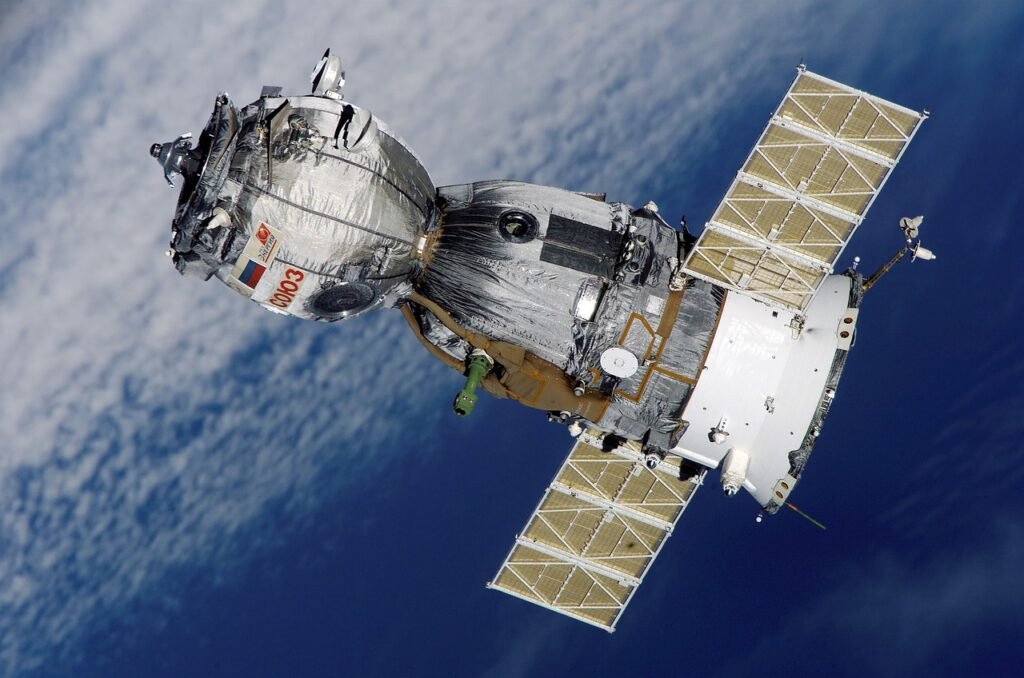
# Space Colonization: Mars versus Orbital Habitats in 2026
The dream of humanity becoming a multi-planetary species has moved from science fiction to engineering reality. Two distinct visions for human settlement beyond Earth have emerged as serious contenders: colonizing Mars and constructing massive orbital habitats. Each approach offers unique advantages and faces distinct challenges that will shape humanity’s cosmic future.
## The Mars Imperative
Mars presents the most straightforward option for establishing a permanent human presence beyond Earth. At approximately 225 million kilometers away, the Red Planet offers several advantages that make it the focus of major space programs worldwide.
SpaceX’s Starship has successfully completed multiple cargo missions to Mars, delivering construction materials and supplies. The company’s timeline targets crewed landings within the next five years, with the goal of establishing a self-sufficient city of one million people by 2050. The iterative approach of testing in the harsh Martian environment has accelerated progress dramatically.
Mars offers natural resources that could support human habitation. Water ice confirmed at the poles and in certain equatorial regions can provide drinking water and oxygen through electrolysis. The regolith contains silicon, iron, aluminum, and other elements for construction. Carbon dioxide dominates the thin atmosphere, potentially convertible to methane fuel for return journeys.
The gravity on Mars—about 38% of Earth’s—may prove sufficient to prevent the bone density loss and muscle atrophy that plague long-duration spaceflight. This could make long-term habitation more feasible than in zero-gravity environments.
## The Orbital Alternative
Meanwhile, space agencies and private companies are developing artificial habitats in Earth orbit and beyond. These structures offer advantages that planetary surfaces cannot match.
Orbital habitats can achieve artificial gravity through rotation, potentially eliminating the health issues associated with microgravity. The proximity to Earth enables rapid resupply and emergency evacuation—critical factors for early settlements. Communication delays would be measured in milliseconds rather than the 20+ minutes between Earth and Mars.
The Gateway Foundation’s concept for rotating space stations has evolved from paper designs to active construction planning. The proposed “Starlight” station would house 1,000 permanent residents in pressurized modules arranged in a wheel configuration. Construction would utilize in-situ resources from asteroid mining, reducing launch costs from Earth.
Blue Origin’s Orbital Reef project envisions a commercial space station serving tourism, research, and manufacturing. The station would include observation decks with panoramic Earth views, potentially creating a new luxury tourism industry.
## Comparative Analysis
The choice between Mars and orbital habitats involves complex tradeoffs spanning multiple dimensions.
From an accessibility standpoint, orbital habitats clearly win. The journey to low Earth orbit takes hours compared to months for Mars. This enables emergency medical evacuations, regular resupply, and the psychological comfort of knowing Earth is visible in the sky. However, orbital decay requires continuous station-keeping, while Mars offers a stable surface with reliable orbital mechanics.
Economic considerations heavily favor orbital habitats in the near term. Launch costs have plummeted with reusable rocket technology, but moving mass to Mars remains orders of magnitude more expensive than placing it in orbit. Orbital manufacturing of high-value products—pharmaceuticals, fiber optics, perfect crystals—could generate revenue to fund expansion.
From a scientific perspective, Mars offers unique opportunities for studying planetary evolution and searching for past or present life. The Martian surface preserves geological records billions of years old in ways that Earth cannot. However, orbital laboratories can achieve vacuum conditions and microgravity environments impossible on planetary surfaces.
## The Synergy Perspective
Perhaps the most compelling argument is not Mars versus orbital habitats but both simultaneously. The technologies developed for one context benefit the other. Life support systems, radiation shielding, food production, and psychological support protocols all transfer between scenarios.
Orbital stations could serve as waypoints and manufacturing centers for Mars-bound spacecraft. The Moon offers yet another location for establishing human presence, potentially providing propellant for Mars missions. A network of settlements across the solar system would provide redundancy against planetary-scale disasters.
## Conclusion
The space colonization debate of 2026 reflects humanity’s expanding ambition. Whether our cosmic future centers on the rust-red deserts of Mars, the gleaming wheels of orbital stations, or some combination, the trajectory is clear: Earth is no longer the only home for human civilization.
The coming decades will likely see both visions pursued simultaneously, with orbital habitats providing near-term commercial and research opportunities while Mars represents the grand long-term project of making humanity truly multi-planetary. The spacefaring civilization depicted in science fiction for generations is no longer a fantasy but an emerging reality.