
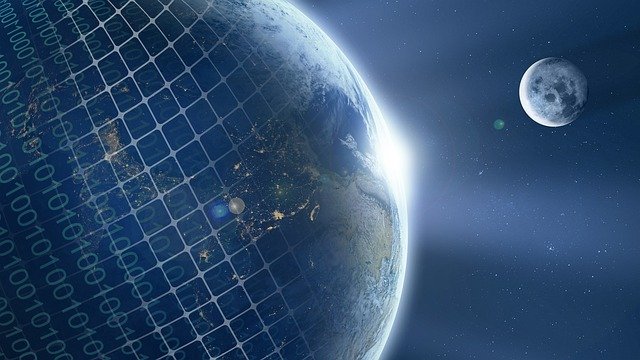
The question of whether we inhabit a simulated reality has moved from science fiction speculation to serious scientific inquiry. In 2026, new evidence from physics, mathematics, and information theory is reshaping this debate in unexpected ways.
The Mathematical Challenge to Simulation Theory
Researchers at the University of British Columbia Okanagan have delivered what may be the most significant blow to simulation theory in years. Their research, published in the Journal of Holographic Applications in Physics, applies Gödel’s incompleteness theorems to argue that the fundamental structure of reality cannot be reduced to a computer algorithm.
The core argument rests on computational complexity limits. The UBC team demonstrated that simulating quantum systems with perfect accuracy requires computational resources that grow exponentially with system complexity. To simulate even a few hundred atoms with perfect fidelity, you would need a computer larger than the observable universe. This “Sign Problem” in quantum Monte Carlo simulations represents a mathematical wall that no simulated reality could bypass.
According to lead researcher Dr. Mir Faizal, “If the universe requires non-algorithmic processes to function, then by definition, a computer—which is a purely algorithmic machine—cannot host it.” This challenges the fundamental assumption underlying most simulation arguments: that the universe is ultimately computable.
The Infodynamics Counterargument
Not all researchers agree. Physicist Melvin Vopson from the University of Portsmouth has been developing what he calls the “Second Law of Infodynamics.” His controversial proposition suggests that information entropy in any system must remain constant or decrease over time—the opposite of classical thermodynamics.
Vopson points to the SARS-CoV-2 virus as evidence. He observed that the virus’s physical information entropy was not increasing but decreasing during mutations—a pattern more consistent with data compression than random biological evolution. “The universe appears to be governed by a mandate to minimize information,” Vopson argues, “a process any software engineer would recognize as optimization.”
New Evidence from 2026
Despite theoretical debates, empirical researchers continue searching for signatures of a simulated universe:
- Quantum Entanglement Anomalies: MIT’s Quantum Simulation Research Group reported 0.03% deviations from predicted quantum mechanics models in 2026, potentially suggesting computational constraints.
- Planck Scale Pixelation: ESA’s LISA Pathfinder data confirms space-time granularity at 1.6 × 10⁻³⁵ meters, consistent with simulation grid hypotheses.
- CMB Statistical Anomalies: Harvard’s Astrophysics Department found 5-sigma level deviations in cosmic microwave background fluctuations.
- Bayesian Probability Update: Oxford’s team, building on Bostrom’s work, estimates simulation probability at 87% based on new physics data.
The European Perspective
While theorists debate, the European Union has invested billions in “Destination Earth” (DestinE), creating a digital twin of the planet. This massive project assumes that sufficient computing power can simulate Earth’s systems with perfect fidelity. However, if UBC’s findings are correct, every simulation—no matter how sophisticated—will eventually hit a wall of irreducible complexity.
The cosmic ray GZK cutoff also offers a potential test. If the universe is a grid-like simulation, there might be maximum energy limits that cosmic rays cannot exceed. While current observations generally match astrophysical predictions, researchers continue searching for subtle deviations that might indicate simulated boundaries.
What Would Confirmation Mean?
The implications of confirmed simulation theory would be profound. It would revolutionize physics, suggesting that laws are emergent properties of computational frameworks. Technology development would take new directions, and profound philosophical questions about existence, purpose, and free will would demand answers.
Yet for now, the debate continues. Whether we live in a cosmic computer program or irreducible physical reality, the search for answers pushes the boundaries of human understanding. As Dr. Lawrence Krauss notes, “The universe’s mathematical elegance might be evidence of code—but it might also simply be the way reality works.”
The simulation hypothesis remains one of the most fascinating open questions in science and philosophy, and 2026 has added significant new chapters to this ongoing investigation.