
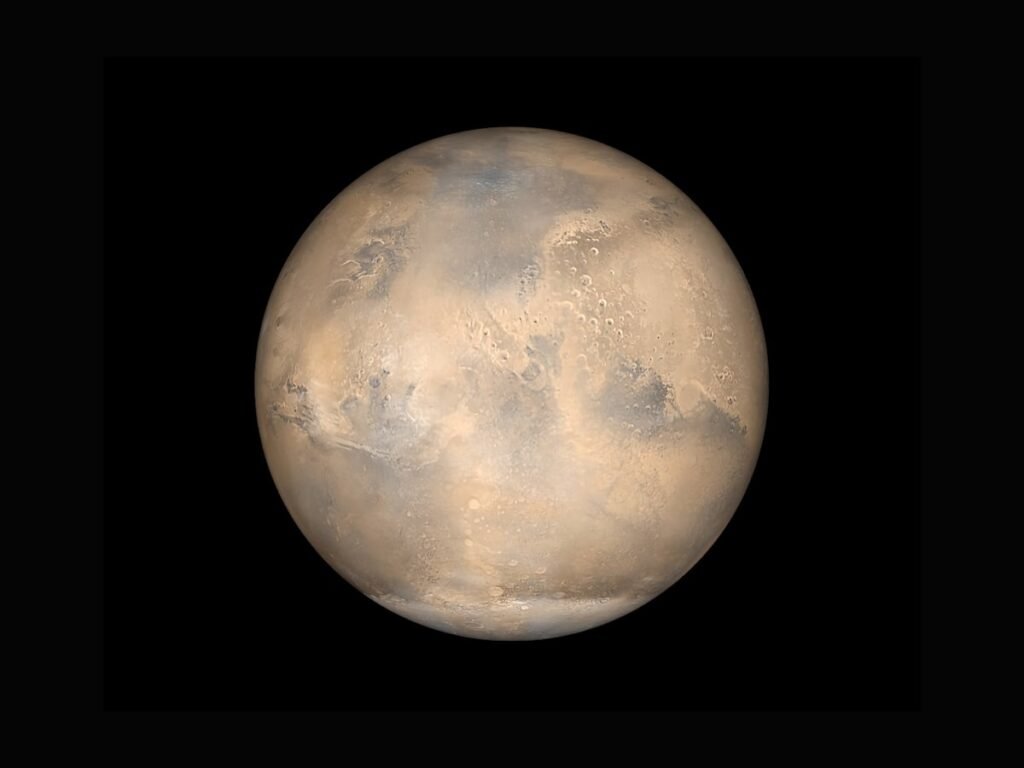
In 2026, SpaceX plans approximately five uncrewed Starship missions to Mars—testing landing capabilities and deploying Optimus humanoid robots to establish ground infrastructure and locate water ice deposits. Success could accelerate crewed missions to 2028-2030. The outcome will also shape SpaceX’s valuation ahead of a potential IPO targeting $1.5 trillion.
The Economic Architecture
Building a million-person Mars city requires roughly $10 trillion in cumulative investment, with potential returns through propellant sales, space tourism, and interplanetary industry reaching $1 trillion annually, according to Science Times analysis.
The foundation is Starship. With 250-ton payload capacity and full reusability, SpaceX’s rocket could reduce launch costs from approximately $2,700/kg to $450/kg. A fleet of 1,000 Starships flying during optimal Mars windows (every 26 months) could eventually transport settlers at prices approaching commercial airline tickets.
But cost reduction is only the beginning. Each Mars-bound Starship requires roughly 1,200 tons of propellant, necessitating approximately 12 tanker launches for orbital refueling per spacecraft. With five Mars missions planned, SpaceX might require 60 tanker launches—a logistical challenge dwarfing anything previously attempted.
The Private Investment Ecosystem
SpaceX’s valuation has soared from approximately $76 in 2021 to $420 by late 2025, pushing company valuation to an estimated $350 billion. Starlink generates approximately 70% of revenue, projecting $22-24 billion by 2026—providing the financial backbone for high-risk Mars initiatives.
The broader space economy is developing infrastructure layers:
Launch: SpaceX and Relativity Space (3D-printed Terran R rockets, 95% printed parts, $2.9 billion in contracts) dominate
Orbital transportation: Impulse Space developing deep-space propulsion, raised $525 million in 2025
Construction: ICON using Mars soil simulant for 3D-printed habitats, NASA contract worth $57.2 million, completed 378-day Mars simulation
Energy: Interlune developing lunar helium-3 extraction, signed first government procurement contract for extraterrestrial resources
The Technical Barriers
Elon Musk has stated approximately 50% chance SpaceX will be technically prepared for the 2026 window. The challenges are formidable:
Heat shield durability: Starship’s reusable metallic-ceramic tiles must endure Mars’ thin, CO2-heavy atmosphere—more corrosive than Earth’s. “No one has ever developed a truly reusable orbital heat shield,” Musk noted.
Landing precision: At 52 meters tall and over 200 tons, Starship is roughly 200 times heavier than any previous spacecraft to attempt Martian landing. NASA’s former Ames Director Scott Hubbard notes: “Landing vertically looks very slick, but look at the failures to land on the moon with a tall, slender vehicle.”
On-orbit refueling: SpaceX has tested only 5 metric tons of propellant transfer in flight—far short of the 1,200 tons needed for Mars missions.
The Philosophical Undercurrent
Peter Thiel, early PayPal cofounder and SpaceX investor, suggests 2024 may have been “the year Musk stopped believing in Mars.” Thiel describes Musk’s original vision: building a libertarian utopia on Mars, inspired by Robert Heinlein’s “The Moon is a Harsh Mistress”—a society free from Earth governments, taxes, and “woke culture.”
The change came from a conversation with Demis Hassabis, DeepMind CEO: “My AI will follow you to Mars.” The implication: escaping to Mars means escaping human nature, including its technological extensions. “You can’t run away. You really can’t run away.”
Musk responded by engaging Earth politics directly—supporting Trump, deep involvement with DOGE. If escape isn’t possible,改造 Earth becomes the alternative.
History supports this skepticism. Mayflower Puritans sailed to America carrying British class structures, prejudices, and power dynamics. Australian penal colonies replicated British aristocracy. Every “new world” has reproduced old world patterns at higher cost.
The Survival Calculation
Despite philosophical doubts, Starship will fly. The deeper motivation for Mars colonization isn’t utopia—it’s insurance against existential risk. Asteroid impacts, pandemics, climate collapse: Earth faces genuine extinction-level threats. Mars becomes humanity’s backup drive.
The 2026 Mars window represents more than technical demonstration. It answers whether SpaceX’s engineering culture can overcome physics itself. Whether trillion-dollar Mars cities are achievable or merely expensive fantasy will be determined by whether those five uncrewed Starships touch down safely.
“Someone has to go first,” notes AstroForge’s CEO after satellite failure. “You have to step into the ring.” The question isn’t whether Mars colonization makes economic sense today—it clearly doesn’t. It’s whether humanity can develop the capability for a future where it must.