
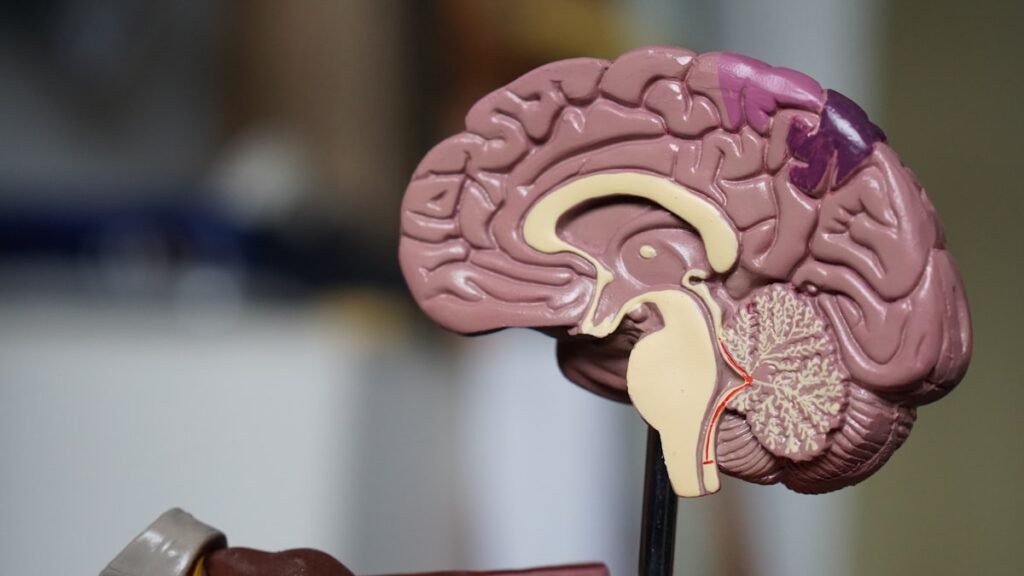
January 2026 marked a pivotal moment in brain-computer interface technology when Elon Musk announced Neuralink would enter large-scale production, transitioning to fully automated surgical procedures. The implications extend far beyond a single company—this announcement signals that BCI technology is transitioning from experimental curiosity to clinical reality.
The Regulatory Breakthrough
The FDA’s decision to establish a clear regulatory framework for implanted BCI devices in 2025 was the single most important development in the BCI industry’s history. Precision Neuroscience quietly made history in April 2025 when its cortical interface device, Layer 7, received the first commercial FDA 510(k) clearance for a cortical brain-computer interface device. In December 2025, Flow Neuroscience’s FL-100 became the first FDA-approved prescription at-home brain stimulation device for major depressive disorder.
These approvals establish precedent and pathways for the broader industry. The global BCI market reached $3.2 billion in 2026, a 14% increase from $2.8 billion the previous year.
Neuralink’s Position
Despite being the most famous name in BCIs, Neuralink is not the first to market. As of early 2026, Neuralink has enrolled 21 trial participants in its PRIME study, with a target of 30. The company’s invasive approach—requiring open brain surgery to implant a coin-sized chip—faces a longer regulatory pathway than less invasive alternatives.
Neuralink’s R1 surgical robot now achieves average implantation speeds of 1.5 seconds per microelectrode thread. The company has developed “dura-sparing” technology allowing electrode threads to pass directly through the dura mater without surgical removal, dramatically simplifying neurosurgical procedures.
In January 2026, Neuralink’s waiting list surpassed 10,000 people following announcement of the mass production phase. The company completed 12 clinical studies covering spinal cord injuries, ALS, and other conditions, collaborating with institutions including the Barrow Neurological Institute and Cleveland Clinic Abu Dhabi.
Competitors Taking Different Paths
Synchron has taken a fundamentally different approach. Its Stentrode device is implanted through the jugular vein, threading into blood vessels near the brain’s motor cortex without requiring open surgery. “Every interventional neurologist in the world already knows how to navigate blood vessels in the brain,” CEO Tom Oxley told IEEE Spectrum. “That dramatically simplifies the path to scale.” Synchron completed its COMMAND early feasibility study with all six patients meeting the primary safety endpoint and raised $200 million in its latest funding round.
Paradromics received FDA approval for its Connect-One clinical study, targeting chronic speech restoration. The company is developing high-bandwidth cortical interfaces with thousands of electrodes aiming for data rates enabling natural-speed speech output for patients with paralysis.
Non-invasive approaches are also advancing rapidly. Emotiv, with over a decade of experience building EEG headsets, introduced MN8 EEG earbuds in 2024, bringing everyday brain-metrics monitoring to a true wireless form factor. Neurable has integrated BCI sensors into commercial headphones targeting office workers who want to track focus throughout the workday.
The Technology’s Promise
The applications extend far beyond restoring movement for paralyzed patients. BCIs may detect changes indicating neurological conditions such as epilepsy, bipolar disorder, OCD, Alzheimer’s, or Parkinson’s disease. Electrical stimulation could be delivered to targeted brain areas as treatment for burnout, fatigue, anxiety, and depression.
Neuralink’s technology currently detects up to 10,000 neural connections—a significant advancement from the hundreds being studied in academic trials. “Giving agency back to those who’ve lost it—that’s an undeniable benefit,” notes researchers who have spent a decade developing BCIs for neurological injury patients.
The Investment Landscape
Venture capital is flowing into BCI at an accelerating rate. Neuralink completed its E-round in June 2025, raising $650 million at a $9 billion valuation, backed by ARK Invest, Sequoia Capital, and Qatar Investment Authority. Synchron’s $200 million raise was the largest BCI funding round outside of Neuralink. In China, BrainCo raised approximately $2 billion, the second-largest BCI funding globally.
China’s national policy framework has also crystallized. In July 2025, seven government departments issued implementation guidance for BCI industry innovation, establishing explicit development goals: complete technology system formation by 2027 and world-leading status by 2030.
Looking Forward
Multiple consumer and clinical BCI devices are expected to reach market in the second half of 2026. The companies to watch are not necessarily those with the most media attention. Synchron’s endovascular approach solves the biggest barrier to BCI adoption—the requirement for open brain surgery. The question is no longer whether BCIs will become mainstream medical technology, but how quickly they will transform millions of lives.